

Choose LED red light therapy devices for a light-based home routine; choose a heat lamp when your aim is warmth. Beside a chair in daylight or in a quiet corner of your home, the right device should match that purpose: a red glow alone does not make a heat lamp equivalent to an LED therapy device, and neither replaces suitable evening lighting.
- Choose LED red light therapy devices for targeted light exposure, not simply for warmth.
- Heat lamps suit warming routines; their red appearance does not establish an equivalent light-therapy dose.
- Suēle offers lamp and panel formats; choose around your treatment area, setup and product instructions.
- Circadian lighting serves your evening environment, not the same purpose as a dedicated red light therapy device.
Why this matters
A useful home routine starts with a clear intention. You might want directed light on a particular area, comfortable warmth, or gentler lighting while reading before bed. Those are different purchases, even when the products look similarly red.
For your 2026 shortlist, compare purpose before appearance. Suēle’s guide to choosing red light therapy devices for your home provides a starting point for comparing home formats. Keep the intended use separate from any promise of a health result.
Red light therapy devices: LEDs or heat lamps for home use?
LEDs are the appropriate starting point when you want a device designed for red or near-infrared light exposure rather than heating. A heat lamp is designed around warmth. Both can emit infrared radiation, but that shared word does not establish the same wavelength distribution, intensity or intended use.
| Option | Best for | Practical advantage | Limitation |
|---|---|---|---|
| LED red light therapy device | A directed light-exposure routine | Specified wavelengths help you identify what light the device emits | Wavelengths alone do not establish dose or results; positioning still matters |
| Heat lamp | Deliberate warming | Provides heat when warmth is the purpose | Heat creates burn precautions and does not establish equivalence to an LED protocol |
| Evening lighting | Reading and winding down | Lights the room rather than a treatment area | Room lighting is not a substitute for a dedicated therapy device |
The important distinction is between light delivery and heat delivery. Photobiomodulation describes the use of light to influence biological activity without making tissue heating the treatment objective. It does not mean every LED device stays cool, or that every home device produces the same outcome.
Do not use the colour of a bulb as a specification. Two sources can look red while delivering different light. A purchase decision needs the stated wavelengths, intended application and operating instructions—not a judgement based on the glow in a photograph.
LED devices: best for directed light exposure
An LED device lets the manufacturer select particular emission wavelengths. That is useful when comparing a product with research that describes the light used. You still need to know how the product is intended to be positioned and operated.
The attraction at home is a defined routine: place the device as instructed, expose the intended area and finish the session according to its manual. The trade-off is that you must follow a device-specific setup. A comfortable chair does not guarantee the correct distance, angle or exposure.
Choose the LED format around the area you intend to expose. A lamp, panel, mask and wrap create different practical arrangements. Their shapes are not evidence that one delivers better results, and an extra mode does not automatically make a device more useful for your goal.
In 2026, treat wavelength information as a useful filter, not a complete quality score. Check whether the manufacturer also explains output, positioning, exposure and precautions. A longer specification list cannot replace clear instructions you can follow at home.
Heat lamps: best for warmth, not an equivalent LED routine
A heat lamp makes sense when warming is the purpose and its instructions support the use you have in mind. Judge it as a heating device. Its intensity, placement and clearance requirements matter because excessive heat can injure skin or nearby materials.
The advantage is straightforward: warmth is the intended effect. The limitation is equally clear: feeling warm does not tell you the red-light dose reaching your skin. Do not substitute a heat lamp into an LED routine because both products use the word infrared.
Keep blankets, curtains and other materials outside the clearances specified by the manufacturer. Use the lamp only while you can monitor it, and follow its eye and skin precautions. Do not interpret discomfort as evidence that a stronger treatment is taking place.
If a clinician has recommended a particular light-based treatment, ask whether the proposed home device matches that treatment. A lamp marketed for heating is not an interchangeable replacement. The equipment and instructions need to match the intended use.
Why the choice varies between homes
The better purchase depends on the routine you can use safely, rather than which device looks more powerful. Compare these factors before committing:
- Purpose: Decide whether you want directed light exposure, warmth or room illumination. One product should not be assumed to do all three.
- Treatment area: Match the format to the area you intend to expose, following the device’s instructions.
- Positioning: Check how you will hold, mount or place the device without improvising its distance or angle.
- Light information: Look for stated wavelengths and operating guidance; a red appearance is not enough.
- Heat and precautions: Read clearance, skin and eye instructions for the exact device, including LED equipment.
- Storage and setup: Choose a format you can place securely and put away without creating cable or obstruction problems.
A living room corner can be a workable location, but only if the required setup fits there. Measure the space and think through the cable route before buying. The device belongs in your routine without turning a walkway into its operating area.
How do you choose a home LED device?
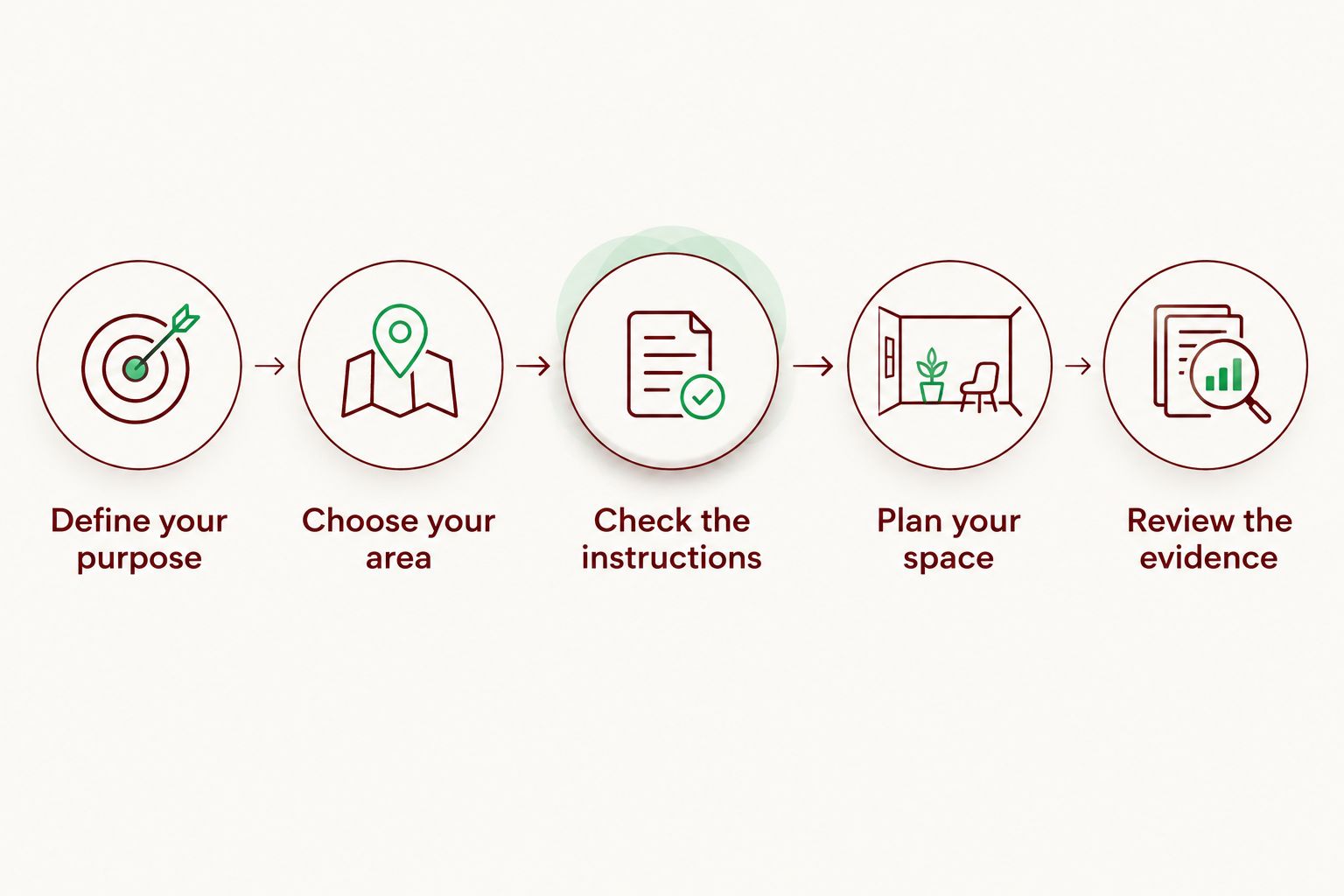
Use this sequence for a 2026 purchase. It keeps the decision focused on your home rather than on the largest panel or the longest feature list.
- Define your purpose. Write down whether you want light exposure, warming or evening illumination. If you want treatment for a diagnosed condition, discuss the intended use with a qualified clinician.
- Choose your area. Identify the area you plan to expose, then compare formats suited to that use. Do not assume a compact lamp and a panel provide identical coverage.
- Check the instructions. Read positioning, exposure, eye precautions and warnings before deciding that the product fits your routine.
- Plan your space. Identify a stable position, a suitable power connection and somewhere to store the equipment. Check any mounting requirements rather than assuming a stand is included.
- Review the evidence. Separate research on light therapy from evidence for the exact device and the result you want.
These checks turn a broad wellness purchase into a practical choice. If you cannot explain where the device will sit and how you will use it according to its manual, pause before choosing a format.
Which Suēle formats belong on a home shortlist?
Suēle red light therapy devices suit home buyers comparing a lamp with an LED panel. The following options belong in that comparison because they are identified as red and infrared light therapy products. Their format is a starting point, not proof of a particular health outcome.
| Device | Best for | Published detail | What to check before choosing |
|---|---|---|---|
| Aurā lamp pro | Buyers considering a lamp format | Listed for red and infrared light therapy; the product URL specifies 660 nm and 850 nm | Positioning, exposure instructions and whether the lamp arrangement suits your intended area |
| Soleira Panel | Buyers considering a panel format | The supplied description lists 70 LEDs, including 35 at 660 nm and 35 at 850 nm | Placement, mounting requirements and operating instructions for your home setup |
The lamp’s practical appeal is its format; its limitation is that you still need to confirm the positioning and area it is intended to serve. The panel offers a different arrangement, with a stated LED count; that count does not establish the dose reaching your skin or prove better results.
For either option, choose the format you can position correctly, not the one with the more impressive name. Read the current product information and manual before making your decision. Product-specific warranty and support terms also belong in that check, rather than being assumed across a whole range.


Does research on red light therapy prove a home device works?
Research on a technology does not automatically validate a particular product. A study’s relevance depends on the condition studied, the equipment, the light delivered and the treatment protocol. Matching a wavelength is only part of that comparison.
For example, a product listing 660 nm red light and 850 nm near-infrared light tells you about its stated wavelengths. It does not tell you that the product reproduces a study’s exposure or delivers its results. LED count and electrical power labels also do not establish the light dose at your skin.
When reviewing claims in 2026, ask what was actually studied. Was it the exact device, a different instrument or the broader technology? Look for a clearly described outcome rather than a general promise to restore health.
Do not use home light equipment to postpone assessment of persistent symptoms or unexplained skin changes. If you take medication that increases light sensitivity, have a relevant eye condition or are unsure about a warning, ask a qualified healthcare professional before use.
Can an evening bulb replace a red light therapy device?
An evening bulb cannot be assumed to replace a dedicated red light therapy device. Lighting a room and delivering a defined exposure to an area of skin are different tasks. A red-tinted room does not establish a treatment dose.
You can keep those routines separate: ordinary daylight for daytime activities, appropriate room lighting for the evening, and a dedicated device used according to its own instructions. Do not assume a bright therapy session is also an ideal bedtime lighting routine.
For a 2026 home setup, start with what each light is for. That distinction is more useful than trying to make every bulb serve as both a room light and a therapy device.
Are LEDs safer than heat lamps?
LEDs are not automatically risk-free, and heat lamps require particular care around heat. Safety depends on the device, its instructions and how you use it. Neither category earns a blanket safety claim.
Follow the exact eye precautions instead of assuming closed eyes provide sufficient protection. Stop using a device if it causes pain or unexpected skin irritation, and seek appropriate advice. Never borrow exposure times from another product’s manual.
FAQ
What’s better for home red light therapy: LEDs or a heat lamp?
Choose an LED device designed for red light therapy when your purpose is directed light exposure. Choose a heat lamp for warmth; the two are not interchangeable simply because both can emit infrared radiation.
Does a heat lamp count as red light therapy?
A heat lamp’s red appearance does not establish equivalence to a red light therapy device. You need to assess its intended use, emission characteristics and instructions rather than its colour.
What do 660 nm and 850 nm mean on a device?
660 nm identifies a red-light wavelength, while 850 nm identifies a near-infrared wavelength. Those figures describe wavelengths, not the dose reaching your skin or a guaranteed result.
Is a larger LED count always better?
A larger LED count does not by itself establish a better treatment. Output, positioning, exposure and suitability for the intended area matter alongside the number of LEDs.
Can I use a red evening bulb instead of a therapy panel?
A red evening bulb is not an interchangeable substitute for a therapy panel. Room illumination does not establish the directed exposure or dose specified for a therapy device.
How long should I use a home red light device?
Follow the exposure instructions for the exact device and intended use. Do not copy a session length from another product or extend it because the light feels comfortable.
Which Suēle red light therapy device should I compare for home use?
Compare Aurā lamp pro and Soleira Panel if you are deciding between lamp and panel formats. Choose according to the intended area, positioning requirements and current product instructions, not an assumed difference in health results.
One last thing
Warmth is a sensation, not a light-dose measurement. A device that feels hotter is not automatically delivering a more useful red light exposure. That distinction prevents a simple but consequential buying mistake.
Before you order, picture the complete routine in your own home: the device’s position, the area exposed, the instructions beside you and the equipment stored afterwards. Choose the arrangement you can use correctly, rather than the one that looks most dramatic.