

Choose a panel if you want a fixed light source for a planned home session, a lamp if you want to direct light towards a particular area, and a wearable wrap if you prefer a device that sits around the area you intend to use it on. None of these red light therapy devices is automatically more effective: the right choice depends on its instructions, light output, intended use and how comfortably it fits into your day.
- Suēle offers red light therapy devices in panel, lamp and wrap formats; choose by intended use, not appearance.
- Panels suit a dedicated setup; lamps suit directed positioning; wearable wraps suit use around a particular body area.
- Wavelengths and LED counts describe a device, but do not establish its treatment dose or clinical effectiveness.
- Red light therapy and circadian lighting serve different purposes; a red room bulb is not a substitute for a therapy device.
Why this matters
A device needs a place in your home before it needs a place in your wellness routine. Picture the chair beside a window, the clear wall in a spare room, or the quiet corner where you unwind after work. Your choice should fit that setting without requiring an awkward position or a complicated setup.
Buy for the area you intend to use the device on, then check whether its instructions suit your routine. The guide to choosing red light therapy devices for your home provides a starting point for that decision.
For a 2026 purchase, distinguish three separate questions: what the device emits, how you use it, and what evidence supports the outcome you want. A product can answer the first two without proving the third. Keeping those questions separate makes a purchase decision clearer.
Red light therapy devices: panel, lamp or wearable wrap?
The practical difference is how you position the light. A panel stays separate from your body, a lamp directs light from a chosen position, and a wrap sits around a particular area. Each format brings a different setup task; none removes the need to follow the manufacturer's directions.
Suēle red light therapy devices suit home buyers comparing a lamp, panel and wearable wrap. The following comparison focuses on format and the supplied product information, not on a claim that one device delivers better health outcomes.
| Device | Best for | Practical advantage | Limitation to consider |
|---|---|---|---|
| Soleira Panel | Red & Infrared Light Therapy | A planned session with a separate light source | A panel format gives you a dedicated positioning point | You need a suitable placement and must follow the specified distance and session instructions |
| Aurā lamp pro | Red & Infrared Light Therapy | Directing light towards a chosen area | A lamp format lets you plan the direction of the light | Positioning still matters; the format alone does not establish coverage or treatment dose |
| Circā Wrap | Red & Infrared light Therapy | Use around a particular body area | A wearable format offers an alternative to sitting beside a separate light source | Fit, fastening and contact instructions need checking before purchase |
Treat these as format recommendations, not an effectiveness ranking. Choose the shape that fits your intended use, then assess the information for that exact model. A panel and a wrap cannot be compared fairly using their appearance or LED count alone.
Panel: best for a dedicated home setup
A panel makes sense when you can set aside a suitable spot and return to it without rearranging the room. Think about where you will sit or stand, how you will reach the controls, and whether the device can remain safely positioned between uses. A dedicated setup has value only if it is comfortable to use as directed.
The supplied description for Soleira Panel lists 70 LEDs, including 35 red LEDs at 660 nm and 35 infrared LEDs at 850 nm. Those figures describe the light sources. They do not, by themselves, establish the amount of light reaching your skin or a result you should expect.
For your 2026 shortlist, ask for the specified operating distance, session guidance and placement instructions. Check whether those directions work in the space you actually have. Do not assume a larger-looking light source means you can use it farther away or shorten a session.
Choose Soleira Panel for a dedicated panel routine; skip the format if you cannot accommodate its required setup. Its practical strength is the separate light-source arrangement. Its drawback is that you must make room for both the device and your instructed position.
Lamp: best for directed positioning
A lamp suits a home routine built around a particular position: a chair, a bedside seat or another suitable surface identified in the device instructions. The useful question is not whether it looks compact in a photograph. It is whether you can position the light correctly without balancing the device or twisting your body.
Aurā lamp pro is identified as a red and infrared light therapy lamp in the supplied product information. Its target-page URL identifies 660 nm and 850 nm wavelengths. That gives you information about the light types, but not enough to set a session length or compare its delivered output with a panel.
Before choosing Aurā lamp pro, check its positioning requirements and intended treatment area. Keep the distinction between directing light and proving coverage clear: light visibly falling across an area does not establish an appropriate dose throughout that area.
Choose Aurā lamp pro when directed positioning suits your routine; skip the lamp format if holding the required position feels impractical. Its advantage is the directional setup. Its limitation is the attention that setup still needs each time you use it.
Wearable wrap: best for use around a particular area
A wearable wrap changes the setup question from where to place a light source to how to fit the device. Check which body areas the manufacturer intends it for, how it fastens, and whether its instructions call for direct skin contact. Do not assume every wrap fits every area comfortably.
The supplied description for Circā Wrap lists 120 LED lamp beads, with 3 chips in each bead, including a red chip at 630 nm. The product title also identifies infrared light. Those details do not establish the infrared wavelength, usable coverage or delivered dose, so they should not become assumptions in your buying decision.
A wrap is not automatically a device for walking around, exercising or sleeping in. Wearable describes its form, not permission to use it during every activity. Check the manufacturer's operating and safety instructions before building it into a hands-free routine.
Choose Circā Wrap when its intended fit matches your chosen area; skip it if that fit is unclear. Its practical benefit is the wearable arrangement. Its trade-off is that fastening, contact and comfort become central to correct use.
Why the right device varies between homes
The best format changes with your room, intended use and instructions. Use these factors to compare your 2026 options rather than treating a product name or headline specification as the whole decision.
- Intended area: Check whether the manufacturer describes use on the area you have in mind. A face routine and use around a body area involve different positioning questions.
- Positioning: Establish whether the device operates at a distance or is designed to sit against the body. Follow that model's directions rather than transferring another device's routine.
- Light information: Look for stated wavelengths and clear output information. An LED count is a description of construction, not a measurement of the dose reaching you.
- Home setup: Consider placement, access to controls, the power connection and storage. A device that requires repeated rearranging adds friction to a simple routine.
- Safety instructions: Read eye-safety guidance, restrictions and advice about medicines or conditions before use. Convenience does not replace those instructions.
- Product evidence: Separate general research on light therapy from evidence for the particular model and outcome. Ask what the supporting information actually demonstrates.
Keep the purchase decision anchored to the exact model. Similar-looking devices can come with different instructions, and a familiar wavelength does not make their routines interchangeable.
How do you choose a device for your home?
Start with the place you will use it, not the strongest-sounding specification. A comfortable setup beside an uncluttered chair is easier to assess than an abstract promise of a better wellness routine.
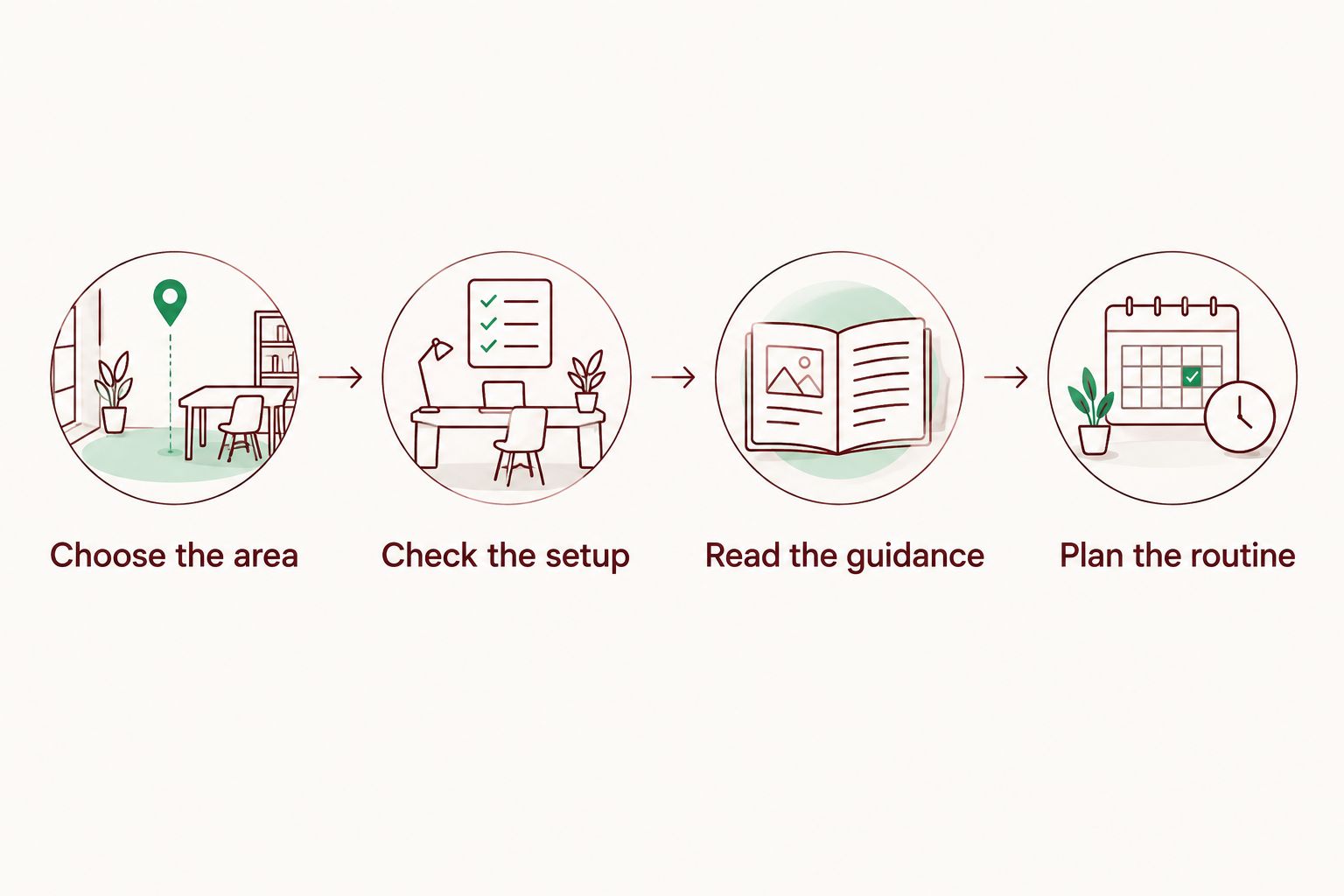
- Choose the area. Write down the intended body area and the reason you are considering light therapy. Check that the product's stated use matches it.
- Check the setup. Read the placement, distance or fit instructions. Confirm you can follow them without improvising supports or attachments.
- Read the guidance. Check session directions, eye precautions and restrictions. If your intended use involves a health concern, discuss it with a clinician.
- Plan the routine. Decide where the device will live and where you will use it. Keep that plan separate from assumptions about results.
The sequence works because it rules out unsuitable formats before you become attached to a model. It also helps you ask precise questions: not whether a device is powerful, but whether its documented use fits your home.
Once those checks are complete, compare the relevant formats side by side. These Suēle options represent the panel, lamp and wearable wrap discussed here; the format comparison does not establish a clinical advantage for any of them.


Do more LEDs mean better red light therapy?
70 LEDs versus 120 LED lamp beads is not an effectiveness comparison. The Soleira Panel and Circā Wrap figures describe different constructions, including different arrangements of light sources. They do not provide a shared measurement of light delivered to the intended area.
Research on photobiomodulation examines particular light parameters, doses, schedules and outcomes. You cannot transfer a study's result to a home product simply because both mention red light. For a 2026 purchase, look for evidence that matches the device and your intended use rather than relying on a technology-wide claim.
Can a red bulb replace a therapy lamp?
660 nm and 850 nm identify wavelengths in the lamp information; they do not make every red-looking bulb equivalent to a therapy device. Room lighting and directed therapy have different purposes. A bulb chosen for your evening environment should not inherit treatment claims from research on another light source.
Suēle offers circadian lighting as well as red light therapy devices. You can consider how your room feels after sunset while assessing a therapy device separately. One purchase does not need to stand in for the other.
Can you copy a session routine from another device?
660 nm and 850 nm do not establish a universal session length. Follow the instructions for the particular model, including its distance or contact requirements. Do not copy a routine from a panel to a wrap because their product descriptions share a light type.
If you cannot find clear operating guidance, resolve that before using the device. A timer setting from an online video is not a substitute for the manufacturer's directions.
FAQ
What's the best red light therapy device format for home use?
The best format is the one whose intended use and instructions fit your home routine. Choose a panel for a dedicated setup, a lamp for directed positioning, or a wrap for use around a specified body area; none is automatically more effective.
Is a red light therapy panel better than a wearable wrap?
A panel is not automatically better than a wearable wrap. Compare intended use, positioning, light output information and model-specific evidence rather than judging effectiveness by format.
Do more LEDs mean a stronger treatment?
More LEDs do not, by themselves, establish a stronger treatment. LED count does not tell you the dose reaching the intended area, and different device constructions are not directly comparable by count.
What do 660 nm and 850 nm mean on a device?
660 nm identifies red light and 850 nm identifies near-infrared light. These wavelengths describe the light emitted, not a guaranteed health benefit or a universal session schedule.
Can I wear a red light therapy wrap while sleeping?
Do not assume a wearable wrap is suitable for sleeping. Use it only in the ways permitted by its operating instructions, including any supervision, contact and session requirements.
Should I ask a clinician before using red light therapy?
Ask a clinician before using red light therapy for a health concern, particularly if you take medicines that affect light sensitivity or have an eye or skin condition. Follow the device's safety guidance and do not use it to replace necessary care.
What should I check before buying a device in South Africa in 2026?
Check the exact model's operating instructions, intended use, power requirements and current warranty terms before buying in South Africa in 2026. Confirm any support or testing claims for that product rather than assuming they apply across a brand.
One last thing
Choose the routine before choosing the device. Before placing a 2026 order, stand in the space where you intend to use it and work through the setup: placement, position, controls and storage. An awkward arrangement is useful information, not something to ignore because a specification looks impressive.
Daylight, a quieter evening room and a directed light session are different parts of home life. Keep their purposes distinct. Your device choice should rest on clear instructions and realistic expectations, not a promise that one purchase restores everything.